Organization · National
Incremental Development Alliance
Two vacant lots in Memphis now hold four homes. The developer, JT Malasri, reworked his plans after attending an Incremental Development Alliance boot camp. IDA teaches the acquisition, financing and construction skills behind projects like his.
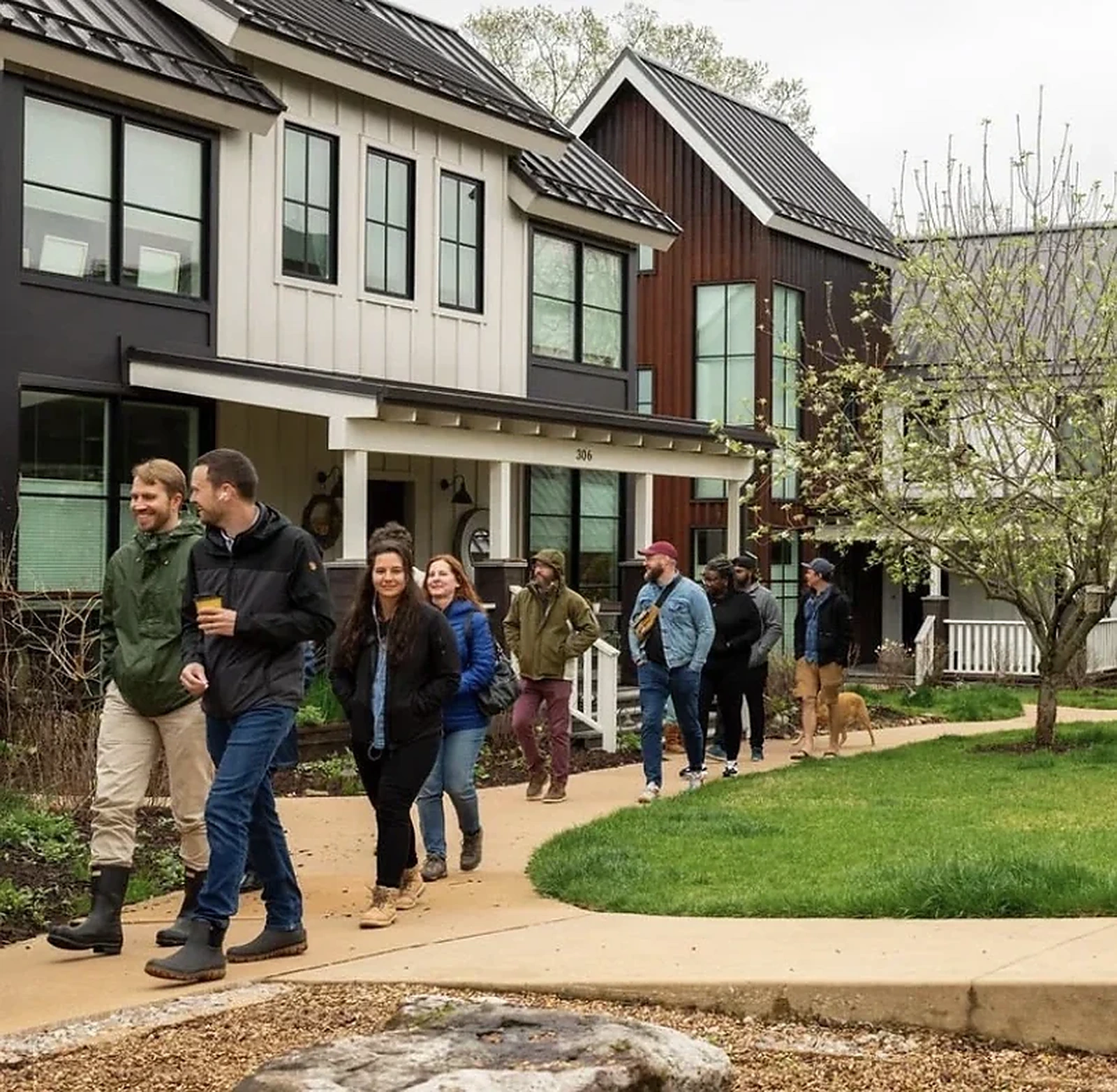
The work begins before anyone pours a foundation. In the Alliance’s Small Developer Boot Camps, participants bring a property or a project idea and test it against zoning rules, a basic site plan and a financial pro forma. They must account for land, construction, financing and the income a finished building might produce. Then they prepare a pitch for potential lenders or investors. An appealing sketch will not rescue a project whose numbers fail.
Malasri’s Uptown Cottages offers one example of what can follow. According to the Alliance’s alumni account, he had acquired two narrow lots in Memphis and adjusted his approach after training. The completed development contains two primary houses and two accessory dwelling units. Four homes fit on land that previously stood empty, with Andre Jones serving as contractor.
The organization’s alumni stories also describe Cameron Brewer’s conversion of a former auto-repair building into The Standard, a restaurant in Norman, Oklahoma. Other projects remain in progress. In Lexington, first-time ground-up developer Will Hanrahan is working on The Railyard, a $7.5 million proposal for 32 apartments and neighborhood commercial space. The Alliance documents his effort to assemble financing and navigate environmental, permitting and construction challenges; the apartments should not be counted as completed homes.
These are individual examples reported by the Alliance, rather than evidence of how many trainees eventually finish a building. Still, they show the range of problems the training is meant to address. In neighborhood development, the hard part is often getting a modest project through the same financial and regulatory hurdles that confront much larger ones.
From training to a building
The Alliance teaches project evaluation and financing; its alumni stories show examples of completed infill and reuse alongside projects still seeking completion.
Key facts
- Boot camp exercises: zoning review, preliminary site plans, financial pro formas and investor or lender pitch materials.
- Completed alumni example: JT Malasri’s Uptown Cottages, four homes on two formerly vacant lots in Memphis, as reported by IncDev.
- Completed reuse example: Cameron Brewer’s conversion of a former auto shop into The Standard restaurant in Norman, Oklahoma, as reported by IncDev.
- In development: Will Hanrahan’s Railyard in Lexington, planned for 32 apartments and commercial space, according to IncDev.