Today, Americans will vote on more than just candidates for public office (though that matters a lot!).
They’ll also vote on different initiatives and ballot measures that will influence places of all sizes across the country.
Among the questions on ballots across the country: Should Colorado invest in a new passenger railroad? How much taller should apartment buildings be allowed to rise in one California beach town? What should Miami do with a piece of its waterfront?
Some of these decisions involve hundreds of millions of dollars. Others come down to a few feet of building height or a change in local rules. We found 15 worth paying attention to.
Note: This is not meant to serve as a voter guide or an active endorsement of any specific ballot measure.
Explore the 15 measures
Select a measure to read the full story, see the images, and follow its official source.
01 / 15Colorado wants to bring passenger rail back to the Front Range
Colorado | Ballot Issue 7A
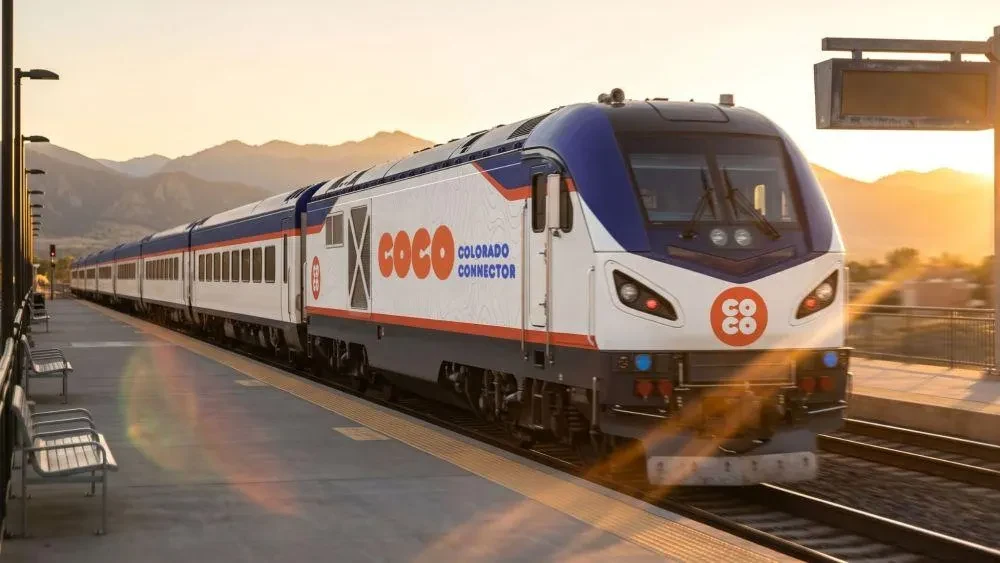
A passenger railroad connecting Colorado’s fast-growing Front Range has been discussed for decades. Now, voters in 13 counties will decide whether to establish a dedicated funding source for it.
Issue 7A proposes a 0.333% sales and use tax to help construct, operate, and maintain Colorado Connector, or CoCo. The planned service would connect communities from Fort Collins to Pueblo, including Loveland, Longmont, Boulder, Denver, and Colorado Springs.
The district estimates the tax would initially raise $295 million annually. The measure also authorizes up to $580 million in debt, with a stated repayment cost of $785 million. Revenue could pay for rail infrastructure, stations, operations, and connections to local transportation. Purchases including groceries, gasoline, and prescription drugs would be exempt.
Approval would provide a major source of funding, although the railroad would still require additional planning, construction, and coordination with existing rail infrastructure.
02 / 15Massachusetts considers making smaller residential lots legal statewide
Massachusetts | Question 7
In some Massachusetts communities, zoning requires a substantial amount of land to build even a single-family house. Question 7 would establish a statewide rule allowing such homes on qualifying lots of at least 5,000 square feet.
The property would need at least 50 feet of street frontage and access to public water and sewer service. Municipalities could continue regulating building height, setbacks, parking, open space, and other development standards, but could no longer require discretionary zoning approval simply to use a qualifying lot for a single-family residence.
The proposal would apply to residentially zoned areas across the state, including communities where current minimum lot sizes are considerably larger. It would not require property owners to subdivide their land or construct new homes.
Supporters argue the change could expand opportunities to build smaller houses. Opponents question whether a statewide rule would adequately account for differences in local infrastructure and planning.
03 / 15Miami weighs an $80 million redevelopment of its Virginia Key marinas
Miami, Florida | Referendum 3
Virginia Key occupies an unusual stretch of Miami’s waterfront, between the mainland and Key Biscayne. The island includes beaches, recreation facilities, historic sites, and two city-owned marinas.
Voters will decide whether Miami can enter a long-term lease covering approximately 27.62 acres at the existing Rickenbacker and Marine Stadium marinas.
The proposed agreement with Virginia Key, LLC calls for roughly $80 million in privately funded improvements, including boat storage, restaurants, retail space, and public parking. The initial lease would last 45 years, with two possible 15-year extensions.
The city would receive minimum annual rent beginning at $2.2 million, with scheduled increases, plus a share of gross revenues. Miami estimates approximately $204 million in guaranteed rent over the initial 45-year term.
The referendum would authorize the lease arrangement. Specific redevelopment work would remain subject to applicable approvals.
04 / 15Austin puts $295 million in parks and libraries before voters
Austin, Texas | Propositions A and B
Austin voters are being asked to authorize two bond packages totaling $295 million for parks, recreation facilities, and public libraries.
The larger proposal, Proposition A, would provide $260 million for parks and recreation. The proposed spending plan includes $65 million for parkland improvements, $65 million for aquatic facilities, $65.5 million for buildings, $29.5 million for infrastructure, and $35 million for land acquisition.
The money could support work at neighborhood parks, recreation centers, swimming pools, and other public facilities. Land acquisition would allow the city to expand its park system or preserve property for future recreational use.
Proposition B would authorize $35 million for libraries, including $20 million for the Hampton Branch at Oak Hill and $15 million for a future Colony Park branch.
Both propositions concern capital spending. The city would still need to move individual projects through design, procurement, and construction.
05 / 15Seattle considers doubling its dedicated transit sales tax
Seattle, Washington | Proposition 1
Seattle’s current voter-approved transit sales tax expires in March 2027. Proposition 1 would replace it with a 0.3% sales and use tax, twice the existing rate, for up to ten years.
The revenue would help fund bus service benefiting Seattle residents, including more frequent routes, service during evenings and weekends, and programs that reduce fares for eligible riders.
Money could also support improvements that make buses more reliable, such as transit-priority infrastructure, better passenger access, and connections with Sound Transit’s regional light-rail system.
Seattle relies on King County Metro for much of its bus network, so local funding helps the city purchase additional service beyond what the county would otherwise provide.
The measure would fund transit operations and related improvements. It would not independently authorize a new rail line.
06 / 15California voters consider new deadlines for environmental review
California | Proposition 45
California’s Environmental Quality Act, or CEQA, requires public agencies to study the environmental consequences of many proposed construction and infrastructure projects before approving them.
Proposition 45 would change that process for specified categories of development, including much housing, transportation, water infrastructure, healthcare, wildfire mitigation, education, internet access, and clean energy construction.
The measure would establish deadlines for agencies to complete reviews and take required actions. It would also shorten certain litigation timelines, limit the evidence courts may consider in challenges, and change how agencies evaluate alternatives to proposed projects.
Those provisions could affect projects ranging from housing developments to water facilities and transportation improvements.
The Legislative Analyst’s Office estimates that implementing the new procedures would initially cost state and local governments tens of millions of dollars annually, potentially exceeding $100 million, with some costs recovered through fees. Longer-term fiscal effects remain uncertain.
07 / 15Chicago asks whether its biggest festivals need a permanent home
Chicago, Illinois | Advisory ballot question
Every summer, major festivals transform portions of Chicago’s Grant Park into large outdoor event venues. Lollapalooza and Sueños bring sizable crowds to the lakefront, along with stages, temporary infrastructure, security operations, and extensive setup and removal work.
Chicago voters will be asked whether the city should develop a permanent outdoor festival and event space for large gatherings.
The question is advisory. A majority vote would express public preference but would not authorize construction, identify a location, or provide money for a new venue.
City officials would still need to consider potential sites, ownership, operating arrangements, transportation access, financing, and the relationship between a permanent venue and existing public parks.
For now, the question is whether Chicago should pursue the concept at all.
08 / 15Omaha considers $185 million for parks and public facilities
Omaha, Nebraska | Two bond questions
Omaha voters face two bond questions totaling $185 million. City officials have identified a major park redevelopment and a new public safety headquarters among their intended uses.
The first measure would authorize up to $30 million for parks and recreation. The city’s principal proposed project is Tranquility Park, near 120th Street and West Maple Road. Planned improvements include athletic fields, restrooms, concessions, parking, and pedestrian facilities.
The second measure would authorize up to $155 million for public buildings. A joint police and fire headquarters at the former Crossroads site is the city’s main stated priority, although the bond language also permits spending on other municipal facilities.
The questions authorize broader categories of borrowing than those individual projects alone. Final spending decisions would occur through the city’s capital planning and budgeting processes.
City officials say the bonds can be repaid without raising the existing property-tax levy.
09 / 15Coronado debates seven additional feet of apartment-building height
Coronado, California | R-4 height measure
Coronado, the coastal city across the bay from downtown San Diego, has a question on its ballot involving just seven feet of building height.
The proposal would increase the maximum height for multifamily buildings in the city’s R-4 residential zone from 35 feet and three stories to 42 feet and four stories.
The change would apply to that zoning district specifically. Other development standards, including applicable setbacks and building requirements, would remain in effect.
City officials connect the proposal to Coronado’s adopted housing plan and its obligations under California housing law. The change is intended to allow an additional story of residential development in areas already zoned for multifamily housing.
Voters are deciding whether to amend the local height limit, rather than approving any particular apartment project.
10 / 15Charlotte asks voters to finance $425 million in housing and infrastructure
Charlotte, North Carolina | Three bond questions
Charlotte has three general obligation bond questions on the ballot, totaling $425 million.
The largest would authorize $280 million for transportation improvements. Another $125 million would support affordable housing, while $20 million would fund neighborhood improvements.
The housing money could support rental housing development, homeownership opportunities, preservation of existing affordable apartments, repairs, and land acquisition. Charlotte has also identified investments near transit corridors as part of its broader housing strategy.
Transportation funding could be used for street, intersection, pedestrian, bicycle, and other mobility improvements. The neighborhood bonds would support smaller-scale public investments in communities across the city.
Charlotte says the borrowing is included in its existing financial plans without a proposed tax-rate increase. Approval would authorize the city to issue debt for the specified purposes, with projects proceeding through future budgeting and implementation.
11 / 15New York City considers changing how street safety projects get approved
New York City | Ballot Question 3
Changing a New York City street can require coordination between the Department of Transportation, elected officials, and community boards. Question 3 would modify some of those procedures.
For certain street projects supported by public safety data, the Department of Transportation could begin work before completing the usual advance notifications. The proposal would also reduce the circumstances in which technical notification or consultation errors could delay a project.
The measure includes two other changes involving city property.
One would establish a shorter review process for certain sales and leases of city-owned property, including some small parcels and development rights. Another would simplify procedures for leasing office space for city agencies.
A vote in favor would change how these categories of decisions move through city government. It would not approve a specific bike lane, intersection redesign, property sale, or office lease.
12 / 15Santa Fe weighs another investment in its Midtown redevelopment
Santa Fe, New Mexico | Bond Question 4
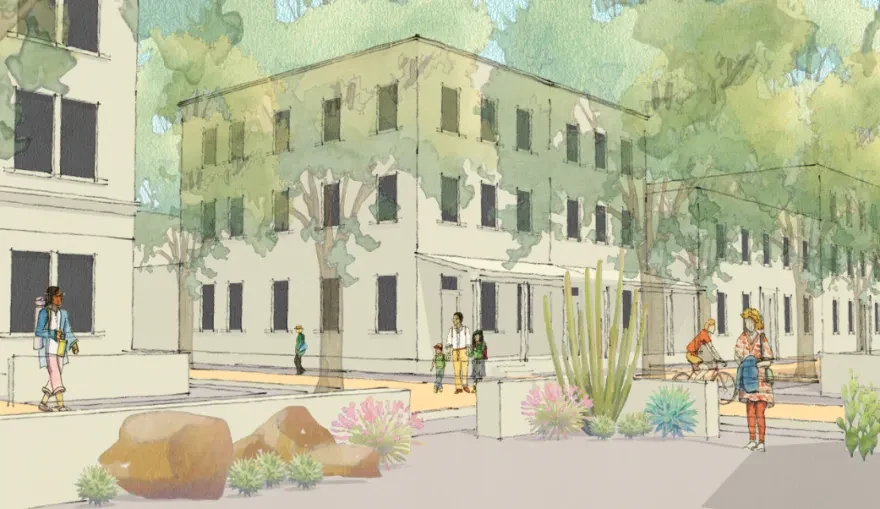
The former College of Santa Fe campus occupies a substantial piece of property in the middle of the city. Santa Fe has spent years considering how to reuse the site, including opportunities for housing, public facilities, commercial activity, and community space.
Voters will decide whether to authorize up to $5 million in general obligation bonds for capital improvements to city-owned Midtown property.
The funding could support infrastructure, site preparation, and improvements associated with future public uses or redevelopment. It would represent one piece of the larger effort rather than financing the full transformation of the former campus.
Midtown is one of four bond questions totaling $25 million. The others involve streets and pedestrian infrastructure, athletic fields at the Municipal Recreation Complex, and recreational improvements at SWAN Park.
The bonds would be repaid through property taxes.
13 / 15Baltimore County considers making its urban growth boundary harder to change
Baltimore County, Maryland | Question A
For decades, Baltimore County has used an Urban-Rural Demarcation Line, or URDL, to guide where more intensive development and public infrastructure should be concentrated.
The boundary separates areas designated for urban development from much of the county’s rural landscape. Its location affects decisions about land development and the extension of public water and sewer service.
Question A would change the County Council vote required to approve Planning Board-recommended adjustments to the line.
Currently, five of the council’s nine members can approve such a change. The proposed charter amendment would require six votes.
The measure would leave the existing boundary in place on Election Day. It concerns how future changes to that boundary are approved.
14 / 15Corpus Christi considers new drought charges for industrial water users
Corpus Christi, Texas | Proposition B
Water supply is a major concern in Corpus Christi, where homes, businesses, and large industrial facilities draw from a regional system that has faced prolonged drought conditions.
Some large industrial customers currently participate in a program that charges a year-round fee in exchange for exemptions from certain drought-related surcharges and restrictions. The existing fee is 31 cents per 1,000 gallons and is projected to generate approximately $6 million in fiscal year 2026.
Proposition B would require the city to begin terminating that program, with termination taking effect no later than the end of a five-year notice period.
After termination, qualifying industrial customers would face mandatory surcharges on water consumption above specified thresholds during Stage 2 and Stage 3 drought conditions and water emergencies.
The proposal would change how industrial water use is charged during more severe shortages. Implementation could involve existing contracts and utility regulations, which the city has identified as potential sources of legal and administrative complications.
15 / 15New York City considers a single permitting system for construction
New York City | Ballot Question 4
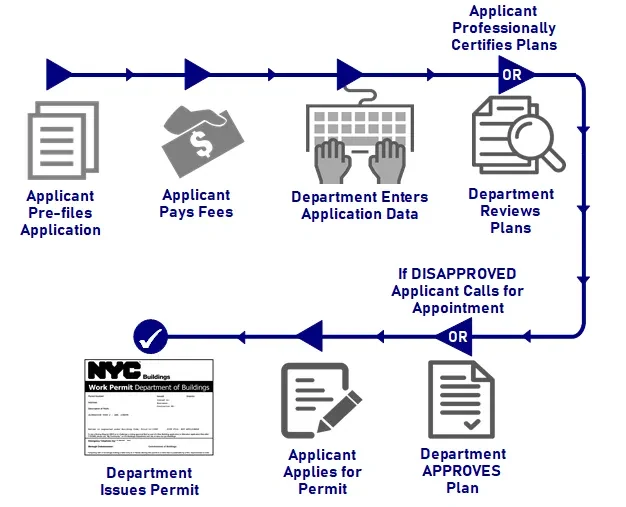
A construction project in New York City can require permits and approvals from several agencies, often through separate application processes.
Question 4 would require the Department of Buildings to develop a centralized system for submitting construction permit applications and receiving approvals by 2030. Other city agencies involved in construction permitting would be required to use the system.
The measure would also expand the number of Department of Buildings officials authorized to approve certain construction documents.
A separate provision would transfer responsibility for permitting specified waterfront structures from the Department of Small Business Services to the Department of Buildings, following a later implementation schedule.
The proposal would reorganize parts of the permitting process. Existing zoning rules, building codes, and other substantive requirements would continue to apply.
These measures cover a wide range of decisions, from major investments in transportation and public facilities to relatively narrow changes in zoning, permitting, and land use.
Some could lead to visible changes in the next few years. Others would establish funding or change the rules that determine what gets built over a much longer period. And even where voters approve a proposal, there’s still the matter of implementation.
We’ll be interested to see how these votes turn out, and especially what happens afterward. And the election results are just part one of the story; whether these plans become reality is another.
We’ll be following both at BUILDPLACES!